
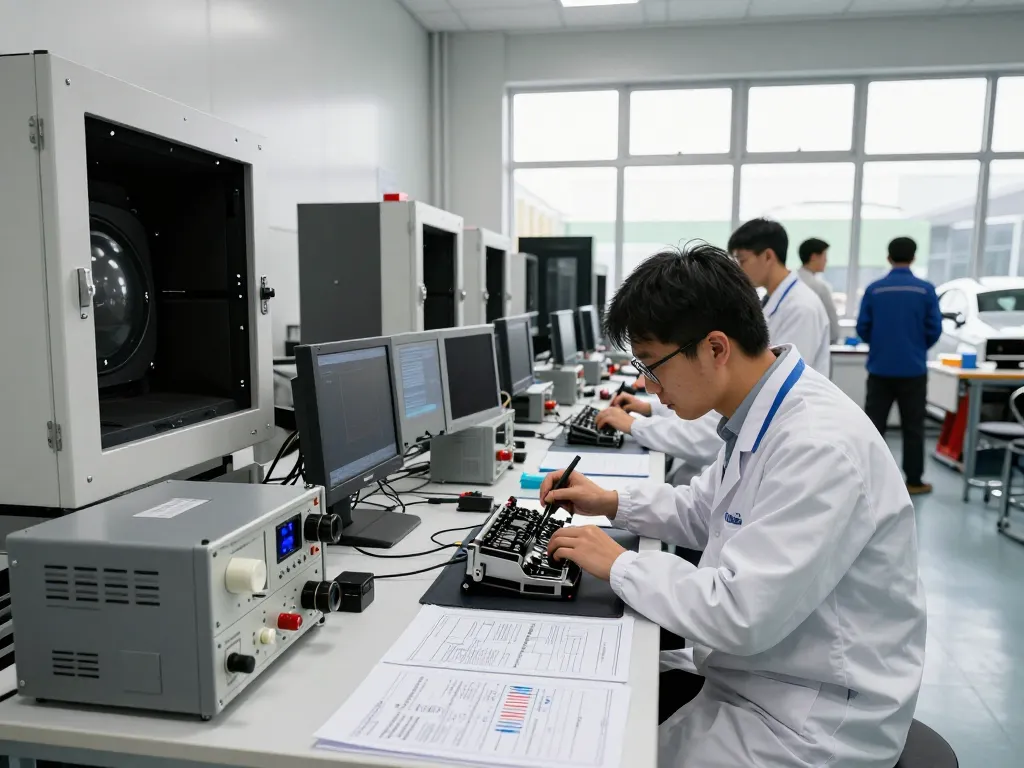
Understanding E Marking in Automotive Compliance
The automotive industry faces increasingly stringent regulations aimed at ensuring vehicle safety and environmental responsibility. Among these regulations, the E marking serves as a pivotal certification, indicating compliance with European Union (EU) standards for vehicle components and their electronic subassemblies. As manufacturers and suppliers navigate the complexities of achieving E marking certification, it becomes crucial to comprehend its significance, regulations, and the accompanying processes necessary to attain compliance in 2026 and beyond. This guide not only delves into the mechanics of E marking but also offers insights and strategies tailored for industry participants.
What is E Marking?
E marking, often referred to as the E-mark, is a type approval mark applicable to the automotive sector, confirming that vehicle components meet specific safety and performance criteria established by European regulations. This certification is crucial for components such as lighting, braking systems, and other essential electronics, ensuring they adhere to the safety and reliability parameters necessary for operation within EU member states.
The Importance of E Marking for Vehicle Safety
The implications of E marking are profound, not only contributing to vehicle safety but also influencing market accessibility. E-marked products can be sold throughout the EU without additional testing, streamlining the process for manufacturers. Furthermore, compliance with E marking integrates international best practices that enhance vehicle performance and reduce the likelihood of failures that could pose safety risks.
Current E Marking Regulations for 2026
As of 2026, E marking regulations are expected to evolve, reflecting advancements in technology and sustainability standards. Manufacturers will need to stay abreast of these changes, adapting their compliance strategies to incorporate emerging requirements. Enhanced testing protocols may be introduced, including more rigorous assessments of electronic and electrical components in vehicles.
Why E Marking Matters for Manufacturers
The ramifications of E marking extend beyond regulatory compliance; they impact a manufacturer’s reputation, market competitiveness, and product lifecycle. By obtaining E marking certification, companies demonstrate a commitment to quality and safety, which can significantly enhance consumer trust. Moreover, the certification process offers an opportunity for manufacturers to identify areas for product improvement.
Benefits of E Marking Certification
- Market Access: E marking simplifies entry into the EU market, allowing products to be sold without needing additional certification.
- Consumer Trust: E-marked products signal reliability, thus fostering consumer confidence and loyalty.
- Competitive Advantage: Companies certified with E marking often stand out in a crowded marketplace.
- Regulatory Efficiency: With E marking, manufacturers can streamline their compliance processes, resulting in faster product launches.
Challenges in Achieving E Marking Compliance
Despite the benefits, the path to achieving E marking certification is fraught with challenges. Manufacturers must navigate complex technical requirements and maintain updated documentation throughout the compliance process. Furthermore, a lack of expertise or resources can hinder efforts to meet the necessary testing and documentation standards, potentially delaying product launches.
Case Studies of Successful E Marking Implementation
Several companies have successfully navigated the E marking certification process, demonstrating best practices in compliance. For instance, a major automotive lighting manufacturer engaged a specialized testing laboratory to guide them through the E marking procedure, resulting in a streamlined process that decreased their time to market by 30%. Such examples underscore the importance of expert guidance in achieving compliance.
The E Marking Process Explained
The journey to obtaining E marking certification involves several key steps that manufacturers must follow meticulously. These steps ensure that all products meet the required standards, facilitating successful certification.
Steps to Obtain E Marking Certification
- Initial Assessment: Evaluate your products against the relevant EU standards to determine compliance requirements.
- Testing: Conduct thorough testing in an accredited laboratory to ensure all aspects of the product meet E marking criteria.
- Documentation: Compile necessary documentation, including test reports and technical files.
- Certification Application: Submit the application for E marking along with the required documentation to the appropriate authority.
Documentation and Testing Requirements
Documentation for E marking must be comprehensive and include technical specifications, drawings, and detailed test results. Testing must be carried out in alignment with the EU directives relevant to the product category, ensuring that manufacturers are equipped with accurate data demonstrating compliance.
Common Mistakes to Avoid During Certification
Manufacturers often encounter pitfalls during the E marking process, which can lead to delays or rejections of certification applications. Common mistakes include:
- Inadequate documentation preparation.
- Failing to conduct all necessary tests.
- Neglecting to keep abreast of the latest regulatory updates.
Future Trends in E Marking Regulations
The landscape of E marking regulations is dynamic, influenced by technological advancements, environmental considerations, and changes in consumer expectations. As the automotive industry progresses, staying ahead of these trends becomes crucial for manufacturers aiming to maintain compliance and competitive edge.
Emerging Technologies Impacting E Marking
With the increasing integration of smart technologies in vehicles, new parameters for E marking compliance are anticipated. Innovations like autonomous vehicles and connected car technologies may require updated testing processes and compliance frameworks, reflecting a shift towards more sophisticated safety and operational standards.
Predictions for E Marking Standards in 2026 and Beyond
Looking forward to 2026 and beyond, it’s expected that E marking standards will evolve to incorporate stricter regulations surrounding emissions and energy consumption. These changes will not only demand more rigorous testing but also push manufacturers toward sustainable practices and innovative solutions.
Industry Insights on Compliance Evolution
Industry leaders predict that collaboration between manufacturers, regulators, and testing laboratories will be essential in shaping the future of E marking compliance. By fostering partnerships, stakeholders can navigate regulatory landscapes more effectively and enhance product safety standards.
Getting Expert Assistance for E Marking Compliance
For manufacturers looking to achieve E marking compliance, expert guidance can be invaluable. Engaging with a qualified testing laboratory can streamline the certification process, ensuring adherence to all regulatory requirements. Resources like E marking provide comprehensive insights into the regulatory landscape, helping businesses successfully navigate their compliance efforts.
How to Choose the Right Testing Laboratory
Selecting the appropriate testing laboratory is critical for ensuring compliance. Manufacturers should consider laboratories that are ISO 17025 accredited, have experience in the relevant field, and provide transparent and detail-oriented services.
Consultation Services for E Marking
Many testing laboratories offer consultation services that can assist manufacturers with technical support, test planning, and compliance strategies. These services can be tailored to meet the unique needs of each product, making the path to E marking clearer and more efficient.
Building a Compliance Strategy with Experts
Finally, manufacturers should develop a comprehensive compliance strategy that addresses all aspects of E marking. This includes regular updates to testing protocols, ongoing training for staff, and a commitment to staying informed regarding changes in regulations.
What is E marking?
E marking is the automotive compliance certification indicating that a product meets the EU’s safety and performance standards.
How can I achieve E marking certification for my product?
Manufacturers can achieve E marking certification by ensuring their products meet relevant EU standards and undergoing the necessary testing in accredited laboratories.
What are the penalties for non-compliance with E marking?
Non-compliance with E marking can result in significant penalties, including fines and restrictions on market access within the EU.
How often do E marking regulations change?
E marking regulations are periodically updated based on technological advancements and regulatory needs, making it crucial for manufacturers to stay informed.
Why should I prioritize E marking in product development?
Prioritizing E marking is essential for accessing the EU market, ensuring product safety, and maintaining consumer trust.