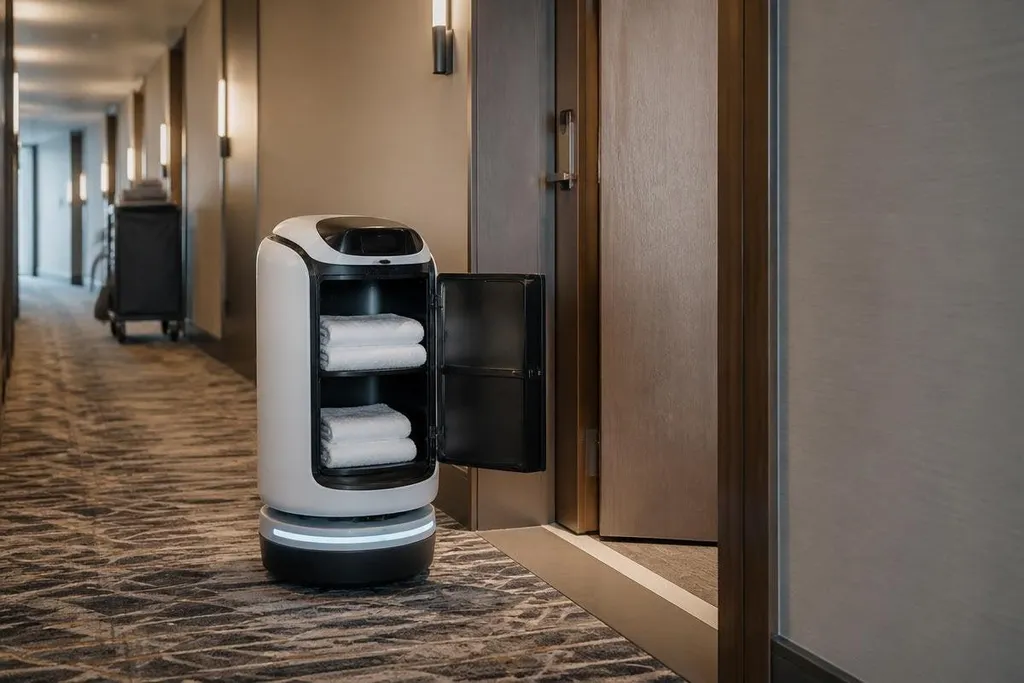
A hotel robot can carry towels, food, or toiletries between a service area and a guest room. The task sounds easy until the robot meets a closing door, a crowded lobby, or a guest who stops in its path.
- Robots can handle repeat trips between fixed points.
- Elevators, doors, guests, and stairs create most of the hard work.
- A hotel still needs staff for service, recovery, and safety decisions.
Where hotel robots help
Hotels have many short jobs that follow the same route. It can carry an item between the kitchen or front desk and a room, then return to a charging point. Staff can spend less time walking through corridors when the robot completes the trip without help.
The value depends on the building. A hotel with wide corridors, reliable lifts, and clear floor plans gives the robot a better place to work. A smaller property with short distances may gain little because a staff member can finish the same delivery quickly.
Cleaning is another possible use. A floor robot can cover open areas on a set route, while staff handle rooms, stairs, edges, and places where furniture changes the path. That division works when the robot stays within a task it can repeat and staff remain responsible for the areas it cannot reach.
Hotel robots can also carry laundry, waste, or supplies between back-of-house areas. These jobs may reduce walking, but they don't remove the need to load the robot, check the route, or deal with a blocked passage.
The building is part of the robot
A robot needs more than wheels and sensors. It may need a way to call an elevator, open an automatic door, stop at the right floor, and tell staff when a delivery is ready. If any one of those links fails, a person has to finish the trip.
The system also needs a map of the hotel. Furniture, luggage carts, wet-floor signs, and temporary barriers can change its route.
Guests create a harder problem because they move without following a marked path. Stopping often may protect people, but it can also take too long to finish a delivery.
A hotel robot has to fit the building as well as the guest service. Doors, lifts, corridors, staff routes, and delivery times can decide whether the machine works in daily use. Robot24.com hotel robotics coverage can place those details beside the robot, its task, and the hotel setting before you price the risks.
The risks hotels need to price in
Safety comes first. A robot must slow down near people, stop when its sensors detect an obstacle, and give a clear signal when it is moving. The hotel needs a simple way to stop it during an emergency, with staff trained to use that control.
Privacy also needs a clear rule. Cameras and other sensors may collect images or data while the robot moves through public areas. The hotel should decide what the robot records, how long it keeps that data, and who can access it before the first guest sees the machine.
Service quality can suffer when the robot becomes a barrier between staff and guests. A delivery box at a room door may work for a routine order, but a guest with a special request still needs a person who can listen and respond.
Jobs are part of the cost as well. A robot may remove walking from a role without removing the role itself. Someone still has to load items, clean the machine, clear faults, answer guest questions, and take over when the building stops matching its map.
Before a hotel buys one
A short site check can expose most of the cost before a purchase decision. Ask these questions:
- Route: Can the robot reach each planned stop without stairs or manual door handling?
- Lifts: Does the elevator accept commands from the robot, and what happens when it fails?
- People: Where will guests meet the robot, and how will it stop safely in a crowded area?
- Work: Who loads, unloads, cleans, charges, and resets the robot after an error?
- Data: What sensors collect information, where is it stored, and when is it deleted?
- Fallback: Can staff complete the job quickly when the robot is unavailable?
The answers should shape the trial. Start with one route and one type of delivery, then measure missed stops, staff callouts, guest complaints, and time saved. A robot that completes fewer trips but needs little help may fit better than one that moves faster on paper.
I'd start with back-of-house supply runs before sending a robot into guest corridors. That test keeps the first risk small and shows whether the hotel can maintain the system without turning every failed trip into a front-desk problem.
Hotel robots make sense when the route is fixed, the building systems work with them, and staff have a clear fallback. The next decision is not whether a robot looks useful in a lobby; it is whether the hotel can support every trip after the first successful delivery.